When Pattern Becomes Place
Some rooms stay with us because they seem to have been thought through in one language. A colour returns in the hem of a curtain. A line reappears in the curve of a chair. A border above a doorway answers the table linen below. Nothing has to shout, yet everything belongs.
This is becoming more visible in hospitality design. Pattern is no longer expected to remain on a wall, a cushion or a printed fabric. It now moves across terraces, parasols, ceramics, furniture, floors, ceilings and the small details through which a guest remembers where they have been.
The clearest recent signals come from fashion houses and hotels with a strong decorative identity. At Le Carillon in Paraggi, Dolce & Gabbana’s Verde Maiolica extends across a resort setting. Burberry’s summer presence at Hôtel Belles Rives in Cap d’Antibes brings its house language to the Riviera. Gucci’s Flora motif in Monaco, Dioriviera’s seasonal spaces, Broadwick Soho in London, Le Grand Mazarin in Paris, The Fifth Avenue Hotel in New York and immersive Milan design-week installations all suggest the same wider movement: surface, colour and ornament are being used to give places atmosphere, identity and memory.
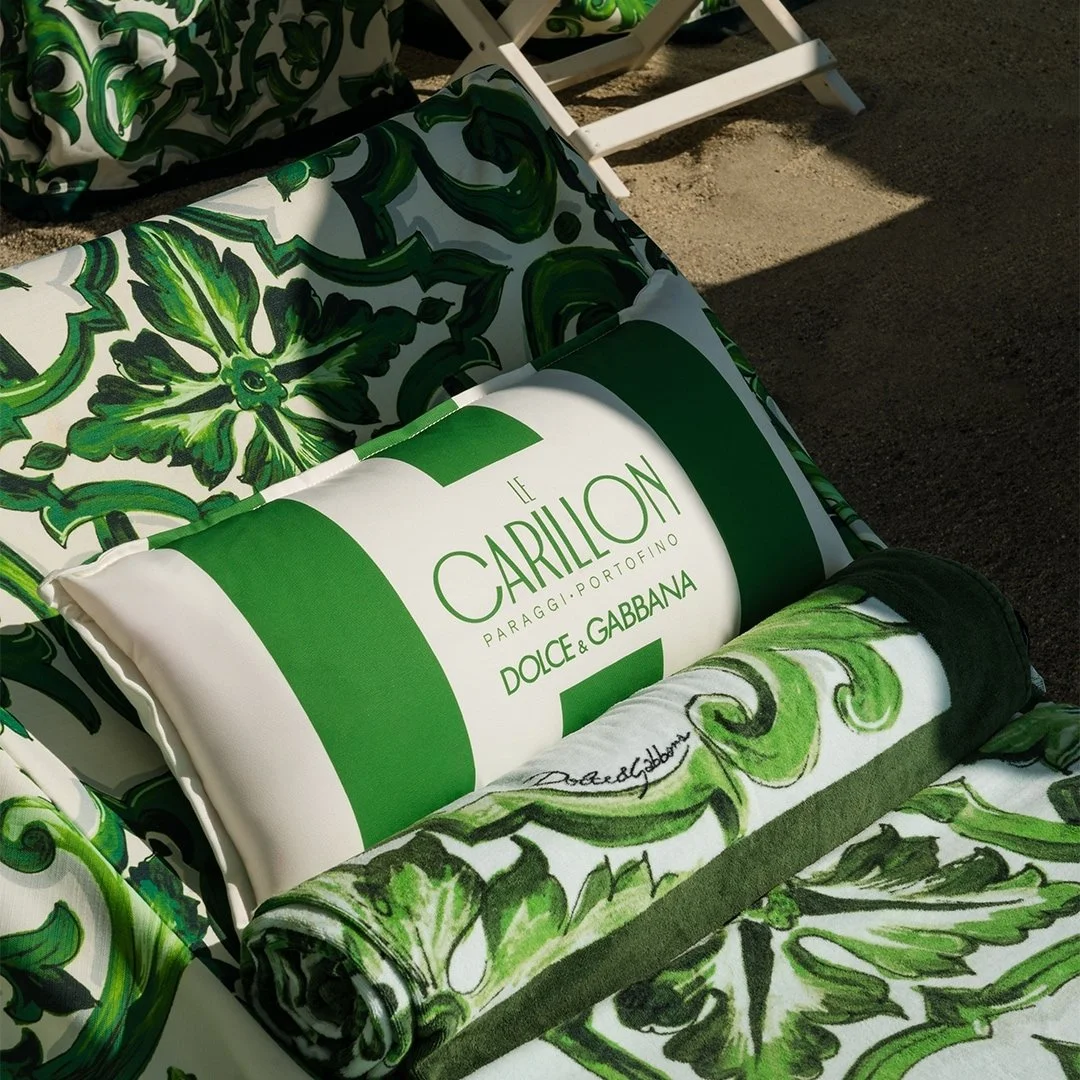
Le Carillon, Paraggi — Dolce & Gabbana Casa Resort, Verde Maiolica. Source: Dolce & Gabbana.
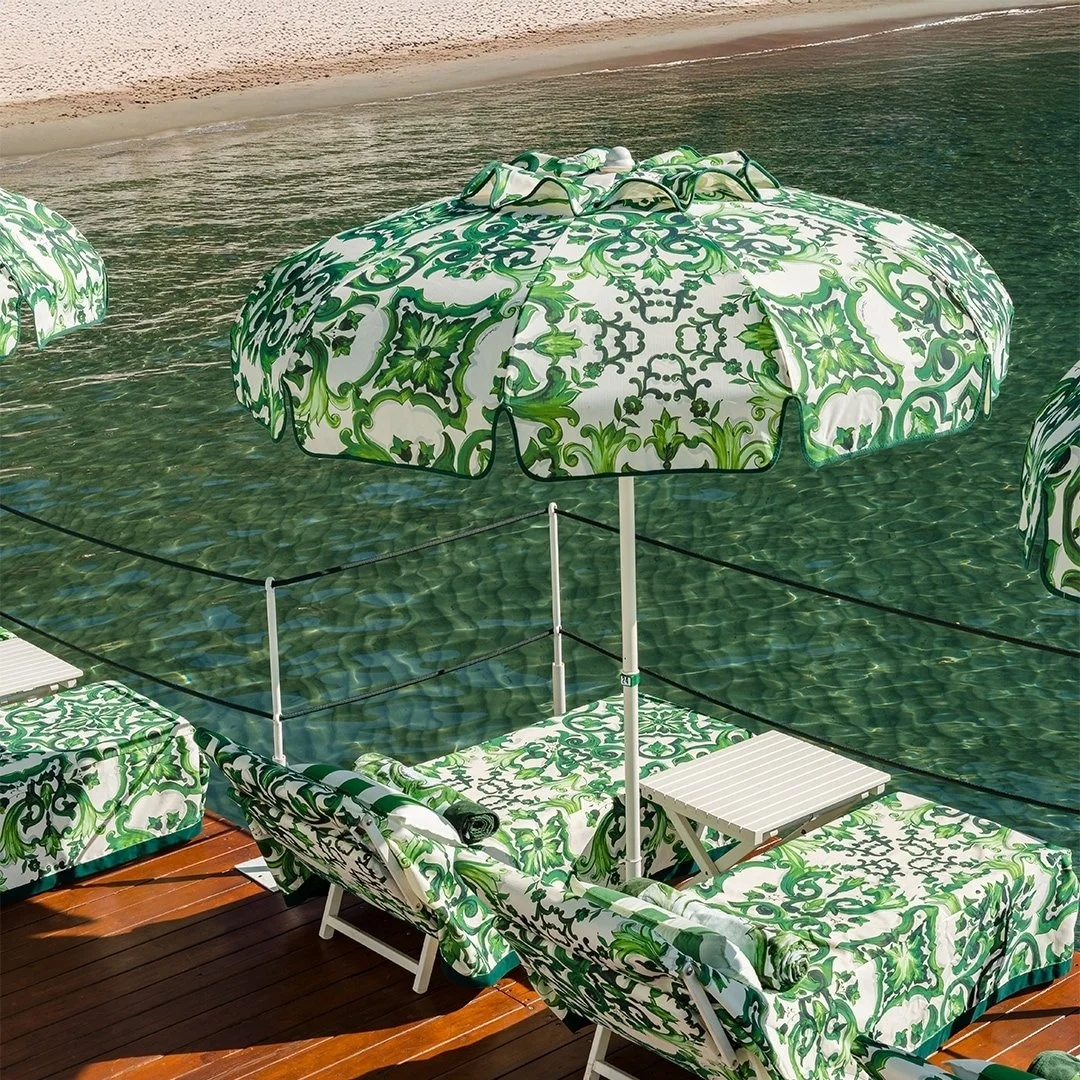
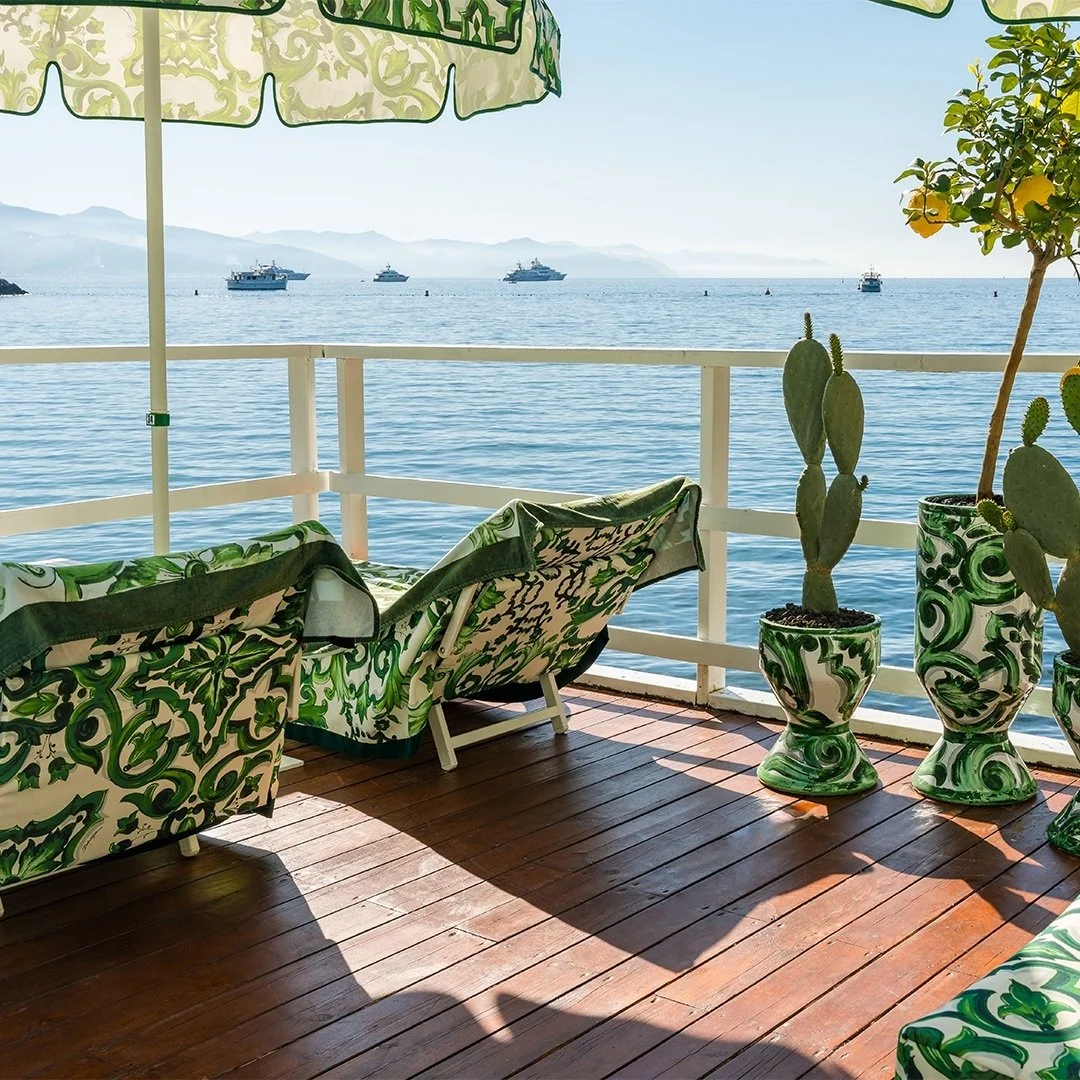
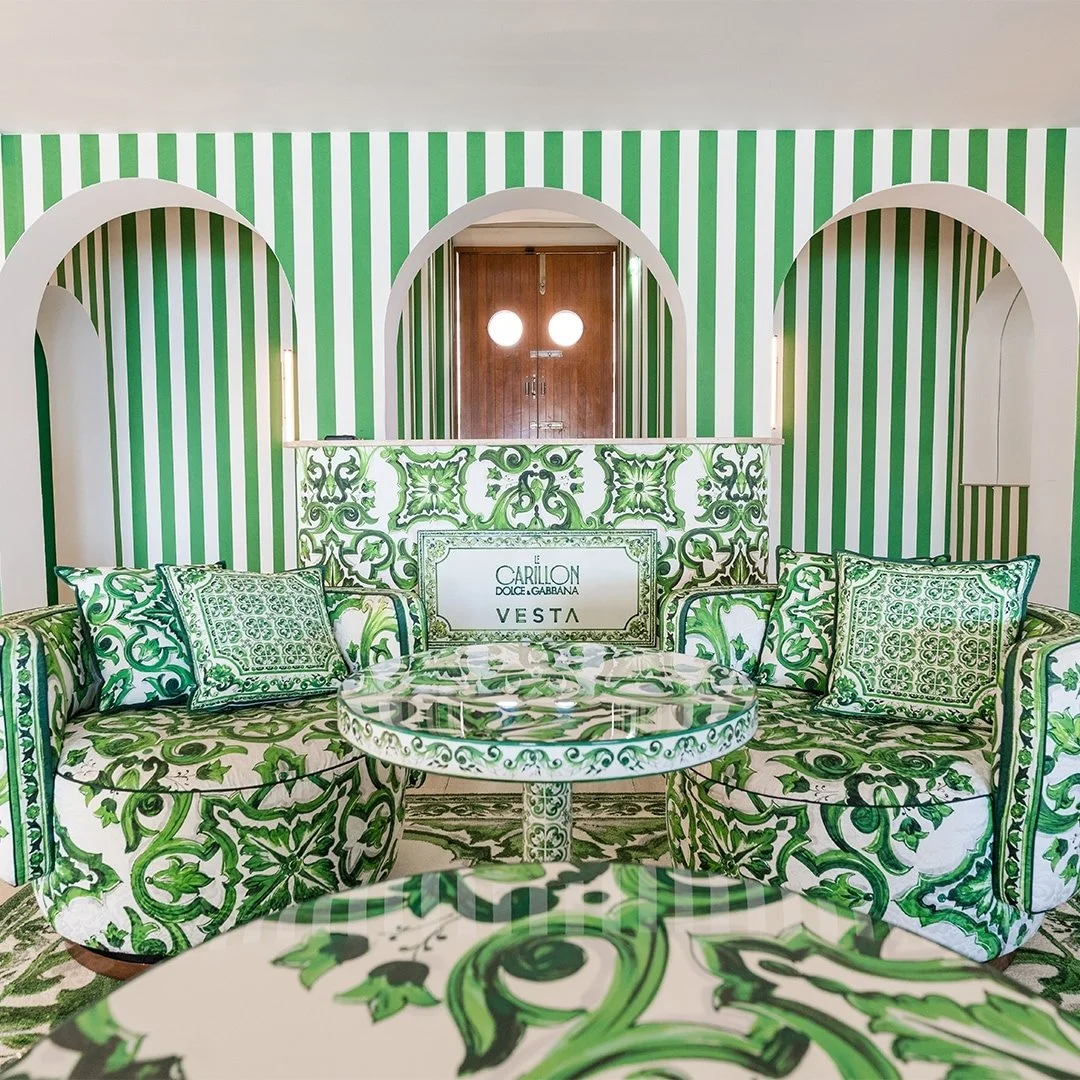
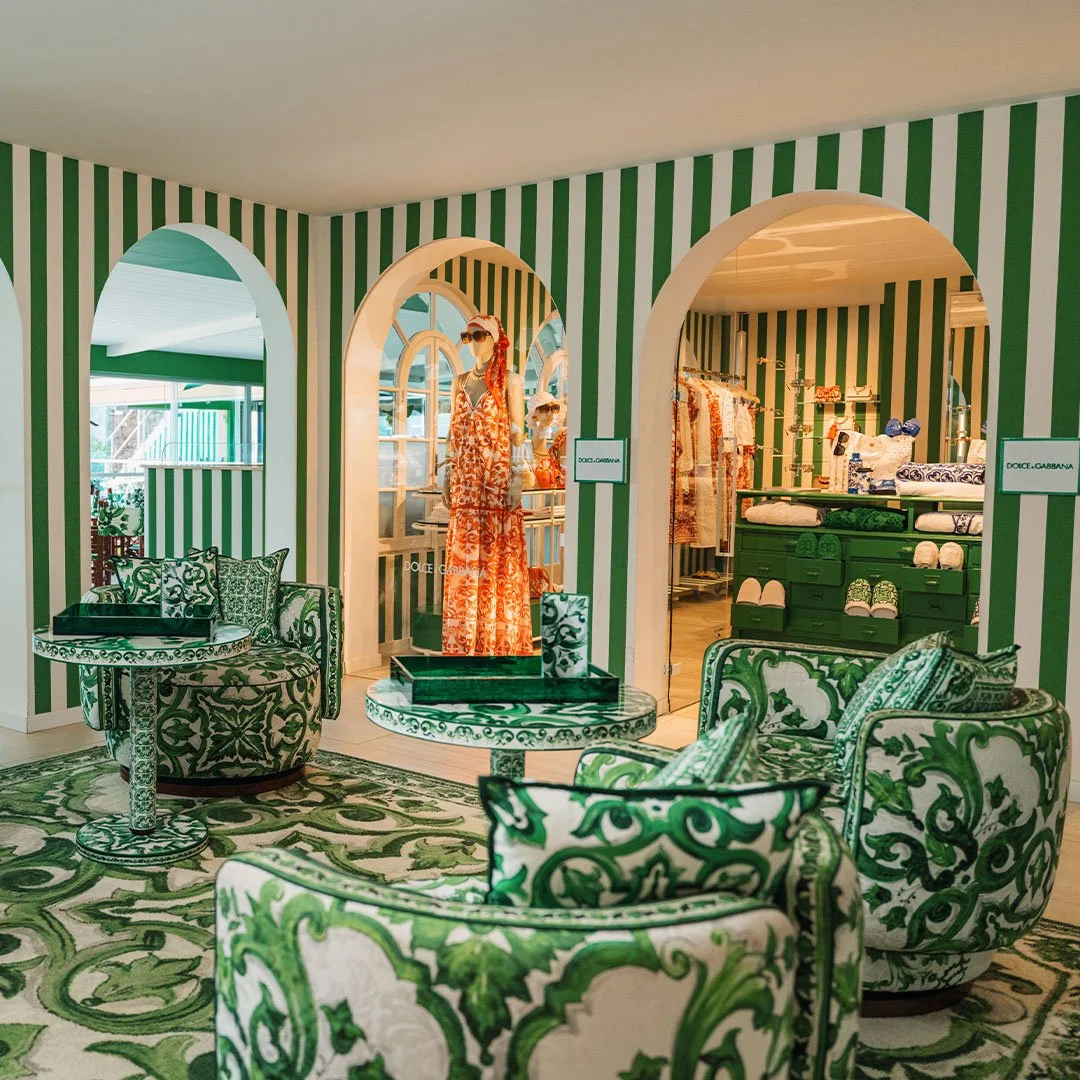
For boutique hotels, restaurants, private clubs and residential projects, the useful inheritance is coherence. The scale may be smaller, the gesture more personal, but the principle is just as valuable: a place becomes more memorable when its details appear to belong to one idea.
How can pattern help a place become more itself?
From motif to memory
A late decorative choice can complete a room. A deeper approach changes how the space is read.
Pattern can influence proportion, rhythm, scale and mood. It can soften a wall, frame a view, create intimacy around a dining table or give a corridor a sense of intention. In a hotel or restaurant, it can also become part of the guest’s memory: the wallcovering behind a banquette, the painted border above a doorway, the repeated note on a terrace, the almost-tonal treatment in a bedroom.
This does not need to be dramatic. Some of the most compelling schemes are built from close-valued colour, softened ornament and surface detail held near the wall. Pattern can be strong without being loud. It can give depth and character while leaving the room space to breathe.
Beyond the branded moment
The large fashion-house projects are useful because they make a wider design instinct easy to see. They show how a motif can travel beyond product and become part of an environment. Yet the more interesting application lies in spaces that are not seasonal campaigns: a small hotel, a restaurant, a villa, a private dining room, a club, a house with its own rhythm and history.
In those settings, pattern becomes less about instant recognition and more about authorship. A wall panel can relate to a border. A ceiling line can answer a textile. A colour in one room can return elsewhere in a softer register. The result is not a matched scheme, but a sense of connection.
This is where bespoke wallpaper and custom wallcoverings become more interesting than a ready-made repeat. They can be designed around proportion, wall divisions, ceiling height, furniture, natural light and the atmosphere of the space. A decorative idea can become architectural without becoming rigid, personal without becoming theatrical.
A room-led approach at Patterned Design
At Patterned Design, this way of thinking can move in many directions, according to the architecture, client and mood of a project. The studio’s work begins with original artwork, yet the wall is never treated as a blank surface waiting to be filled. Scale, movement, print, sampling and installation all affect how a design will live in a real room.
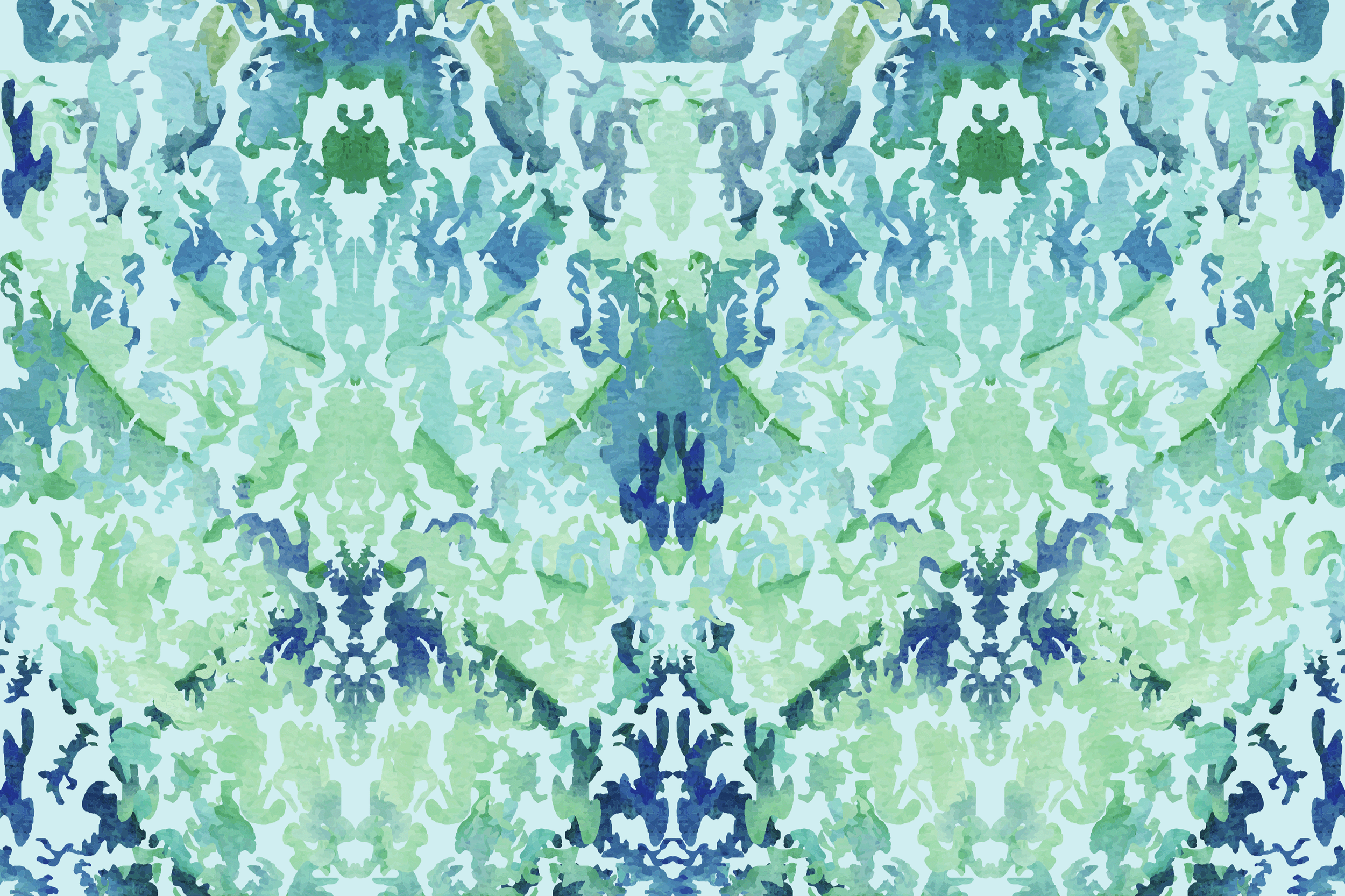
Sea Garden in Aqua Green, from the Gallery of Dreams Collection by Patterned Design.
Within the studio, one developing direction explores how fresco structure, garden detail, painted grounds and softened colour might become a flexible decorative language: panels, borders, stripes, lower wall sections, ceiling details and more restrained surfaces for boutique hotels, restaurants and private homes.
Before motif comes architecture. The rhythm of a room, the height of a wall, the pause above a doorway, the weight of a lower panel, the way light crosses a surface — these decisions shape the pattern as much as the drawing itself. Flowers, leaves and ornamental details bring life, but the room gives them discipline.
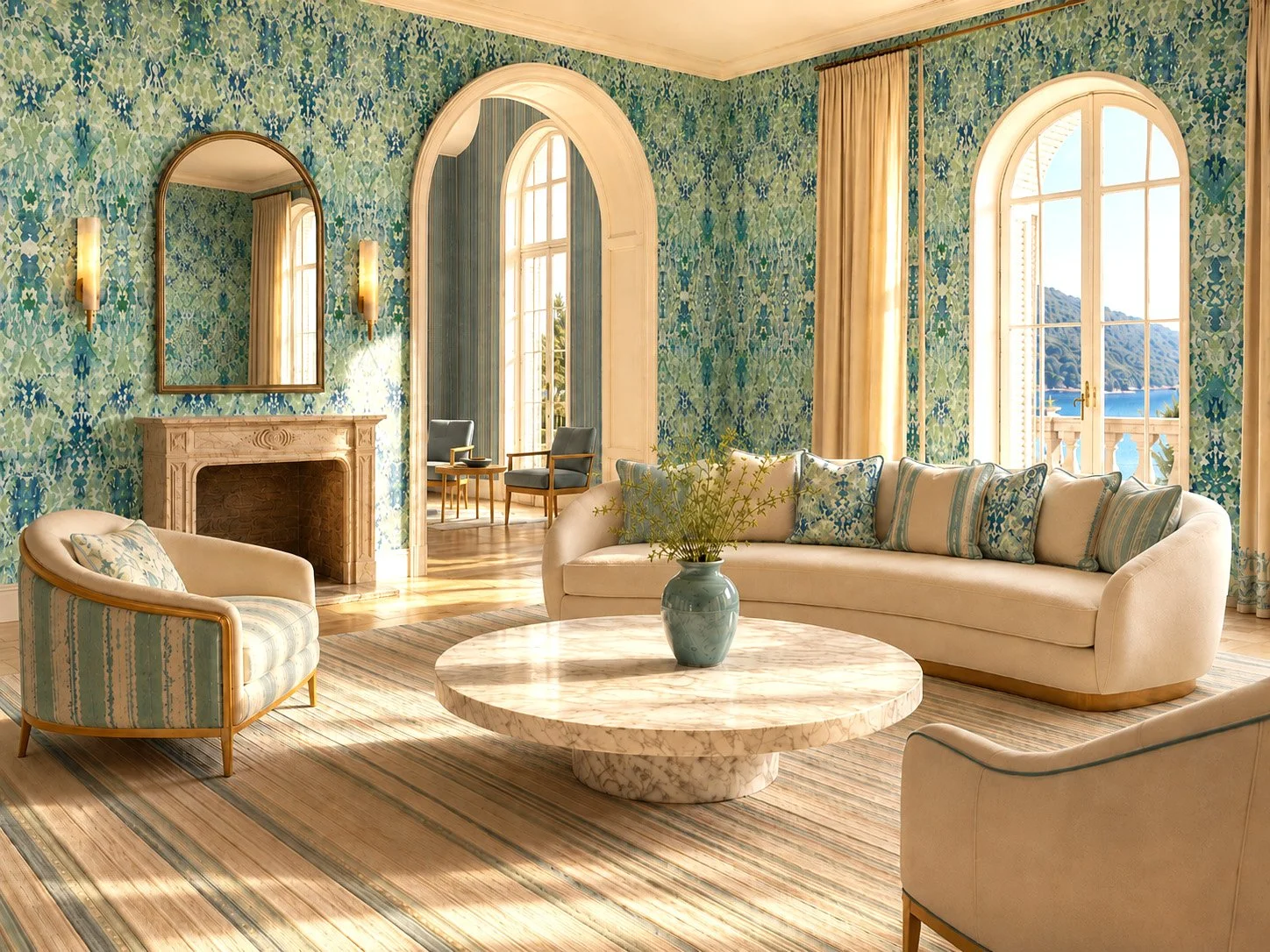
Sea Garden in Aqua Green, shown as a bespoke wallcovering concept for a private interior in Rapallo, Liguria.
One language, many forms
A successful wallcovering language should be able to change scale without losing its character.
One space may call for a large decorative panel. Another may ask for a frieze, stripe, repeat, underbody section, ceiling framework or monochrome treatment. Hospitality interiors often need that range. Entrances, dining rooms, suites, corridors and private corners each require a different weight, while still belonging to a related family.
The same thinking can serve a house. Every room does not need to match, but a related palette, a recurring line, a garden detail or a border language can give continuity without sameness.
This is the difference between applying a pattern and developing a decorative language.
The value of the hand-drawn
Hand-drawn wallcoverings bring judgement to the process. They allow for adjustment, irregularity, softness and scale. A line can be refined. A motif can be opened up. A repeat can be made less mechanical. A panel can answer an awkward elevation rather than imposing a standard design upon it.
For bespoke wallpaper and custom wallcoverings, the practical stages matter as much as the first idea: original artwork, colour development, repeat engineering, sampling, print preparation and installation planning. These decisions are not separate from the atmosphere of the finished room. They are part of it.
In hospitality interiors, this matters especially. An artwork may be beautiful in isolation, but it has to live across real walls, corners, light conditions, furniture heights and guest movement. It must read from across the room, reward attention close up and hold its place without exhausting the eye.
The best wallcoverings understand both image and architecture.
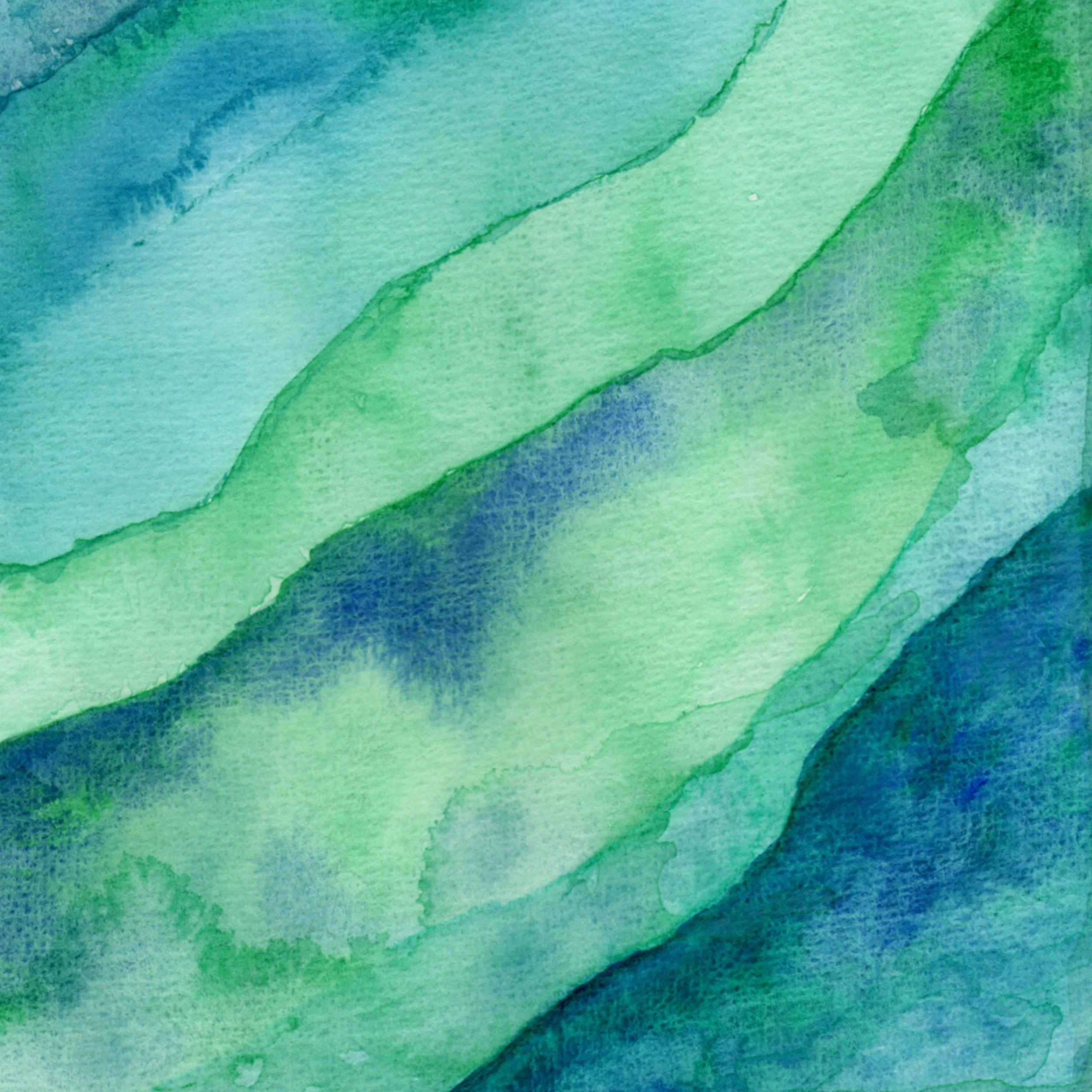
Watercolour texture study used in the development of Sea Garden, a hand-drawn pattern from the Gallery of Dreams collection.
Pattern as place
The renewed interest in pattern-led hospitality reflects a wider desire for rooms with identity. After years of neutral spaces that could belong almost anywhere, designers and clients are again drawn to interiors rooted in a location, a story, a mood, a house, a garden, a restaurant, a view or a way of living.
Pattern can create that specificity. It gives a space recognisable rhythm. It connects surfaces and details. It allows a hotel suite, dining room or private salon to feel authored rather than assembled.
When pattern becomes place, it is no longer only something seen. It enters the way a room is remembered.
For Patterned Design, this is the territory that feels most alive: bespoke wallpaper and custom wallcoverings developed as part of a room’s visual language. A motif can be drawn, scaled, coloured and adapted until it belongs to the architecture, the atmosphere and the people who will use the space.
That is where a wallcovering begins to do more than cover a wall.