Bespoke Wallpaper Begins with the Room
A bespoke wallcovering begins long before a motif is drawn. It begins with the room.
Before any artwork is developed, there is the architecture to understand: the height of the ceiling, the rhythm of windows, the position of doors, the depth of a cornice, the fall of natural light across plaster, timber or stone. Then come the more personal details: a favourite fabric, an inherited chair, a garden beyond the window, a colour already belonging to the house, or a particular atmosphere the room is meant to hold.
This is where a commissioned design differs from choosing a ready-made roll. It is not simply selected and applied. It is developed in response to proportion, light, existing materials, decorative history and the way people move through a space. The result may be decorative, but it should never feel detached from the interior.
Patterned Design creates hand-drawn bespoke wallpaper and custom wallcoverings for refined residential and hospitality interiors. Each project is developed from original artwork through scale, colour, repeat, sampling, print preparation and installation planning, so the finished piece belongs naturally to its setting.
Beyond the Ready-Made Roll
Ready-made wallpaper has its place. When the colour, scale and pattern language are already right, it can resolve a room beautifully. A bespoke commission enters at a different point: when the interior calls for a more exact answer.
A private house may need a design drawn to sit with existing upholstery, antique furniture, panelling or curtain fabric. A dining room may require enough depth to hold evening light. A bedroom may call for a softer rhythm around a headboard, lamps and windows. A stair hall may need a repeat that travels gracefully across turns, landings and changing viewpoints.
For work of this kind, the right studio needs to understand both artwork and interiors. Drawing matters, but so do scale, repeat, colour, paper, print, sampling and the practical journey towards installation. A beautiful drawing is only the beginning. Once translated onto the wall, it must have the right proportion, the right visual rhythm and the right relationship with the architecture around it.
The value of bespoke work is not only originality. It is suitability. A custom design can be made more generous, more restrained, warmer, cooler, larger, smaller, more open or more detailed according to the room. It can support an existing scheme rather than compete with it.
How a Commission Usually Begins
A good commission starts with context. Photographs, approximate measurements, wall elevations where available, existing fabrics, paint colours, architectural details and furniture references all help the studio understand what the room needs.
Sometimes the brief is very clear: a hand-drawn design for a particular bedroom, dining room, hallway or powder room. Sometimes it begins more loosely, with a feeling, a period reference, a garden, a textile, or a colour palette that belongs to the house. In other cases, an existing collection design may already be close to the right direction and simply needs to be adapted in scale or colour.
This is why the first stage is not only about choosing a motif. It is about deciding the right route. A project may call for completely original artwork, a revised colourway, a change of repeat size, a coordinated scheme across several rooms, or print preparation for an interior designer’s wider project.
For private clients, the process can help turn a room into something more personal without making it over-decorated. For interior designers, decorators and architects, it gives more control over proportion, palette and how the design sits within a wider scheme.
Drawing for Architecture, Light and Scale
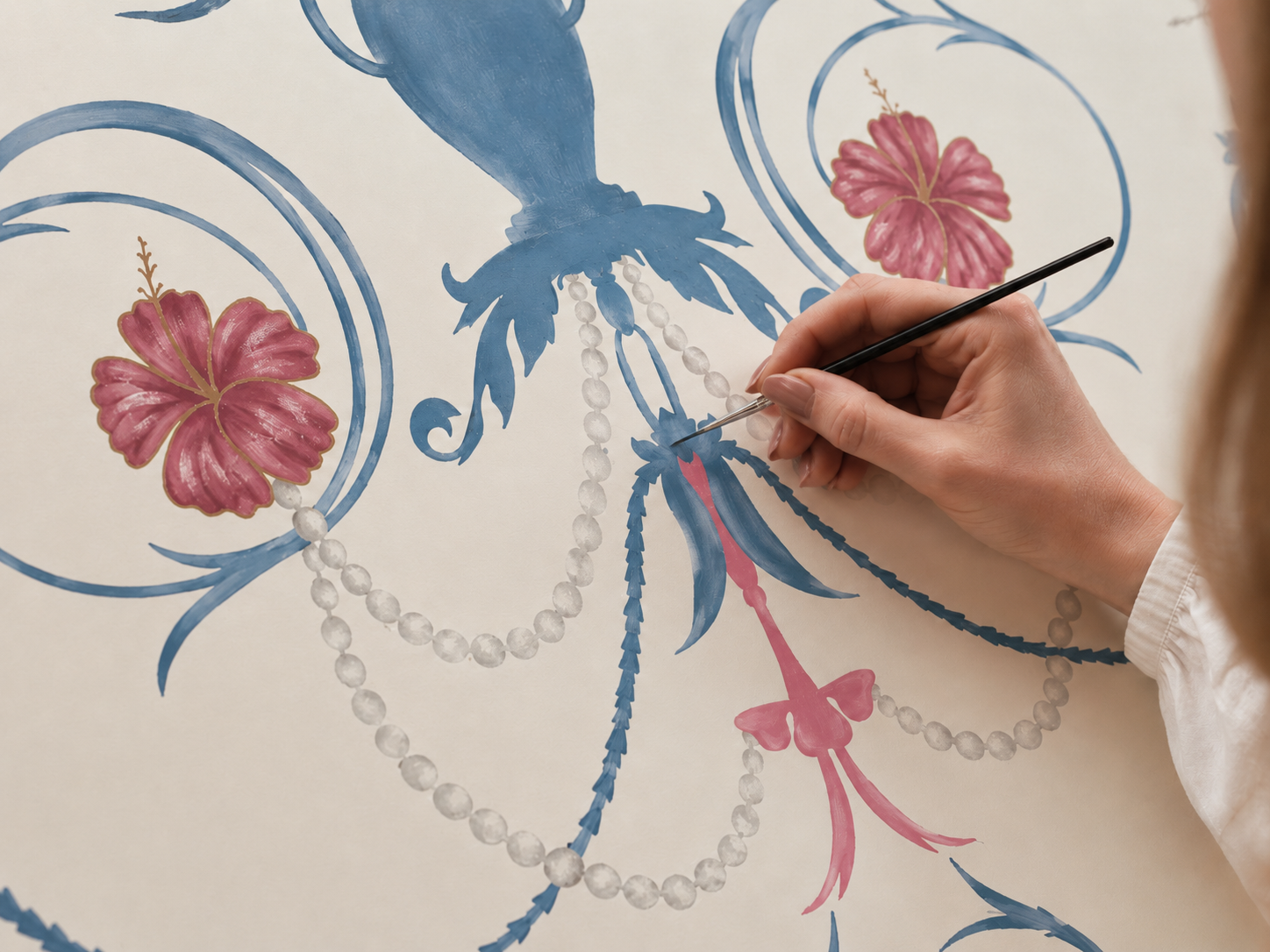
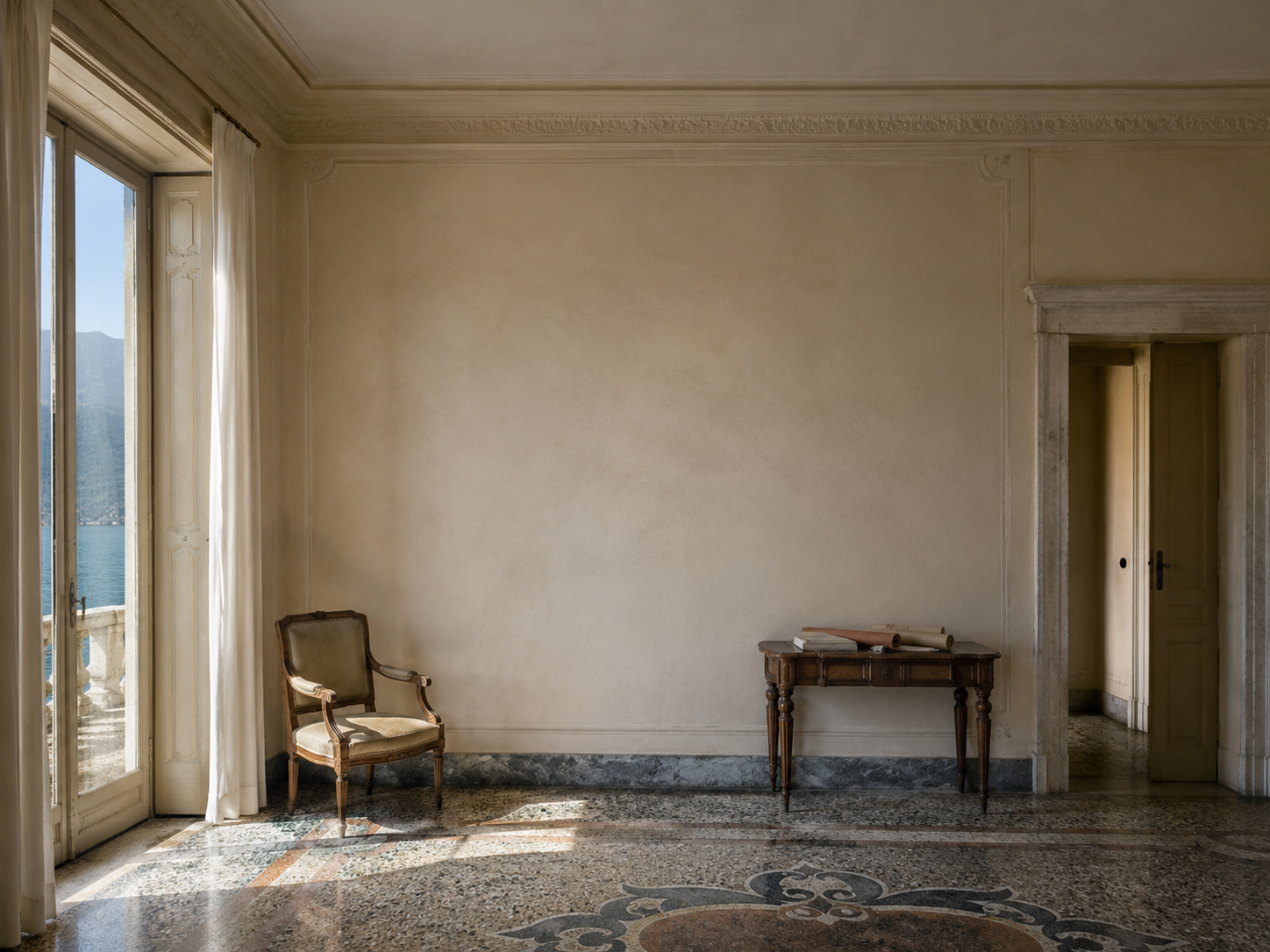
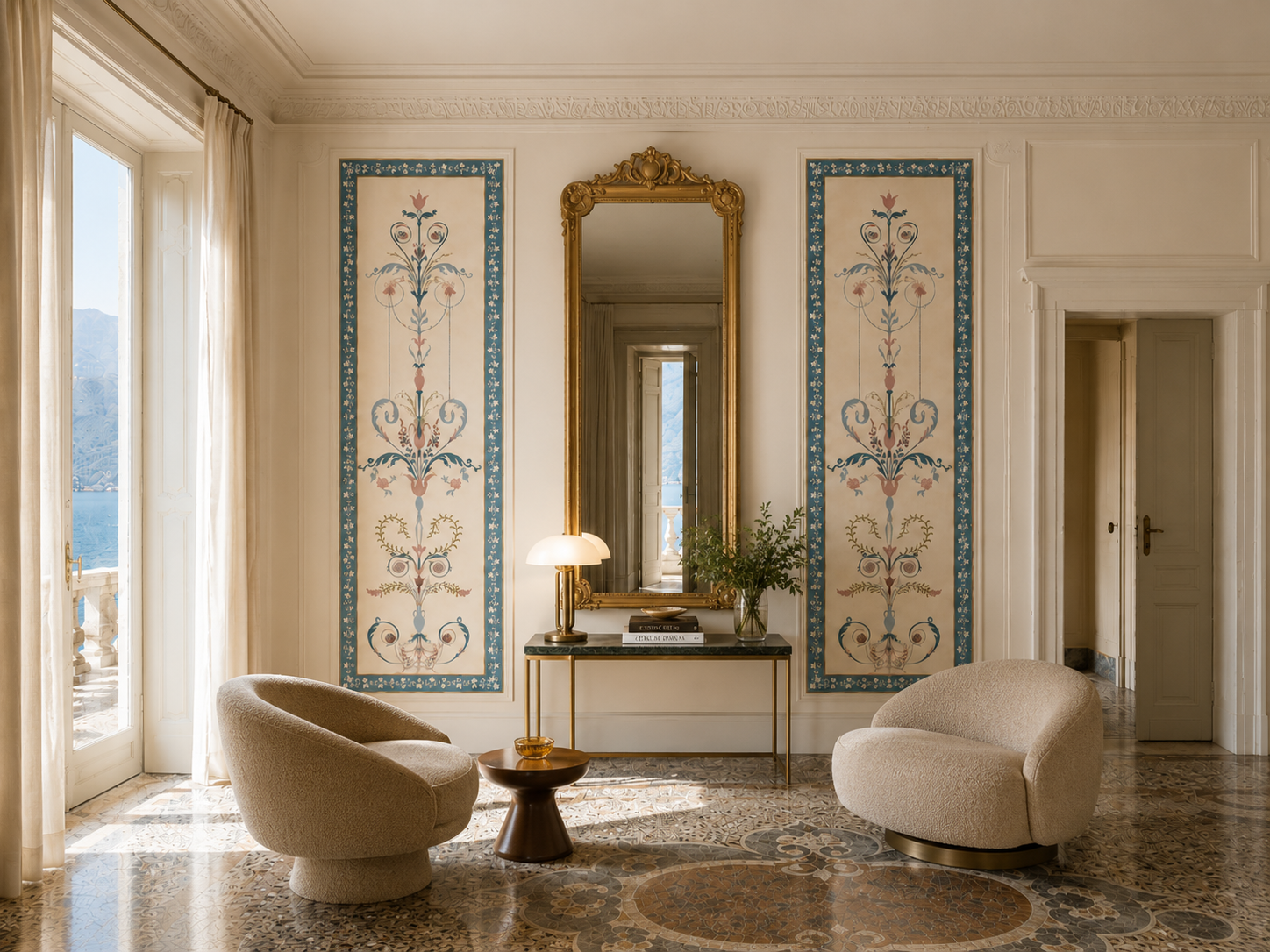
Hand-drawn work carries the movement of the hand. Its character comes from decisions that are almost invisible at first: the pressure of a drawn stem, the turn of a leaf, the discipline of an ornamental curve, or the restraint of the line itself. It may echo embroidery, old textiles, painted decoration, garden planting, historic ornament or something more particular to the client and the house.
But in a bespoke wallcovering, drawing has to become architecture’s companion. The artwork must be developed into a repeat that can wrap a room and make sense across real elevations. Motifs need space around them. Corners need thought. Doorways, fireplaces, cupboards, mirrors and thresholds all affect how a design is read.
Scale is one of the most important decisions. A small pattern can become restless across a large wall. A generous repeat can feel too grand in a narrow corridor or small bedroom. The right proportion depends on ceiling height, wall width, furniture placement, viewing distance and the character of the interior.
This is where bespoke design becomes especially useful. The repeat can be adjusted before printing. Motifs can be given more air. A border, panel, colourway or layout can be reconsidered. The design is not forced onto the room; the room helps shape the final piece.
Colour, Surface and Sampling
Colour is never independent in an interior. It changes with daylight, shadow, lamps, paint, timber, stone, upholstery and surrounding architecture. A shade that appears balanced on screen can become too cool, too sharp or too flat once printed on a particular surface.
A printed sample is therefore not a formality. It is the first real conversation between the design and the room. It allows the client and designer to judge colour, contrast, paper surface and scale in the actual light of the space. A ground may need more warmth. A line may need softening. A motif may need clearer definition.
Print preparation is also part of the design process, even when it is less visible. Artwork must be prepared at the correct scale and resolution. Repeats must be checked. Colour needs careful handling for production. The choice of substrate matters too, especially where the project involves bathrooms, stair halls, corridors, hotel bedrooms or other areas with more practical demands.
Patterned Design can support this journey from original artwork to print-ready design, working with specialist printers and providing installation guidance or coordination where needed. Installation itself should be carried out by a suitable professional installer, with clear information supplied about the repeat, roll layout, surface and site conditions.
For Private Homes
In a private home, a commissioned wallcovering can create a closer relationship between the interior and the people who live there. The design may refer to a garden, a place, a textile, a period detail or a less obvious sense of mood. It can be personal without becoming literal.
A bedroom may need softness and rhythm rather than drama. A dining room may need enough presence to hold candlelight and evening shadow. A hallway or staircase may require movement and continuity. A bathroom or powder room can often take a more concentrated decorative idea, but still needs proper thought around surface, ventilation and installation.
Compared with a ready-made design, the advantage is fit: the colour can be developed around the scheme, the scale can respond to the architecture, and the pattern can be composed with the room’s purpose in mind. At its best, the result feels as though it belongs to the house, even when newly made.
For Boutique Hospitality Interiors
For boutique hotels, restaurants and other hospitality settings, custom wallcoverings have a slightly different role. They need to create atmosphere, but they also need to work across repeated rooms, public spaces, professional installation schedules and daily use.
Interior designers commissioning this kind of work usually need to consider more than the first impression. Repeat consistency, substrate, durability, light, cleaning requirements, installation planning and any relevant contract specifications can all affect the final result. A hotel bedroom, corridor, reception room and dining space may need related but distinct treatments.
A bespoke or adapted design can give a hospitality interior a more particular identity without relying on a widely recognisable pattern from a ready-made collection. It can respond to the building, the location and the wider interior scheme while still being properly prepared for production.
The strongest hospitality projects tend to be collaborative. The interior designer brings the spatial vision and the relationship between materials. The wallpaper studio brings drawing, pattern, colour and production knowledge. The printer and installer bring the technical expertise needed to turn artwork into a finished interior element.
London, the Italian Riviera and a Sense of Place
Patterned Design works with private clients, interior designers, decorators, architects and boutique hospitality projects, with a natural connection to London and the Italian Riviera.
These two settings offer different kinds of interiors. London brings layered architectural histories: townhouses, apartments, period renovations, Georgian proportions, inherited rooms and contemporary interventions. The Riviera suggests another kind of atmosphere: light, terraces, gardens, sea air, older buildings adapted for modern life.
A bespoke design does not need to describe its location literally. A house near the sea does not need shells or waves. A Georgian room does not need overt historical ornament. The connection can be subtler: a colour temperature, a botanical rhythm, a sense of proportion, a reference to old textiles, or the way a pattern holds light across a wall.
That is often where custom work is most valuable. It allows the design to be specific without becoming obvious.
From Drawing to Interior
Commissioning hand-drawn bespoke wallpaper does not need to feel complicated. The most useful beginning is a conversation around the room: photographs, approximate dimensions, existing design references, preferred colours or materials, and a sense of what the wallcovering should bring to the space.
From there, the right route can be defined. A project may call for original artwork, an adapted collection design, a custom colourway, a change of scale, sampling, print preparation, or broader support through installation planning.
The aim is always to create a design that sits naturally within the interior. Not a stock product placed onto a wall, but a wallcovering developed with the room in mind.
Questions Often Asked Before Commissioning
What kind of studio should I look for?
For a refined interior, look for a studio that understands both artwork and rooms: drawing, repeat, scale, colour, print preparation and how the finished wallcovering will be installed. Bespoke wallpaper is not only a printed image; it has to work with architecture, light, furniture, fabric and proportion.
How does a bespoke wallpaper commission usually begin?
It usually begins with the room. Photographs, approximate dimensions, existing fabrics, paint colours, architectural details and a sense of atmosphere are often enough to start the conversation. From there, the right route can be defined: original artwork, an adapted collection design, a custom colourway, sampling or print preparation.
Why choose bespoke wallpaper rather than a ready-made design?
Ready-made wallpaper can be beautiful when it already suits the space. Bespoke work is useful when the room needs a more exact response: a particular scale, colour, rhythm, motif or relationship with the interior. The value is not only originality, but fit.
What should interior designers consider for hospitality projects?
For boutique hotels, restaurants and other hospitality interiors, the wallcovering needs to create atmosphere while also meeting practical demands. Scale, repeat consistency, substrate, durability, light, installation planning and production schedules all need to be considered early.
Does Patterned Design work with projects in London and the Italian Riviera?
Patterned Design works with private clients, interior designers, decorators, architects and boutique hospitality projects, with a natural connection to London and the Italian Riviera. Projects may begin with a private house, a hospitality interior, an adapted collection design or a fully bespoke hand-drawn wallcovering.
For private residential, interior design and boutique hospitality projects, Patterned Design welcomes enquiries for hand-drawn bespoke wallpaper and custom wallcoverings developed from original artwork to print-ready design.